4/4 vs 3/4 vs 6/8: How to Count Each Time Signature and Why They Feel So Different
The top number of a time signature tells you how many counts fit in one bar, and the bottom number tells you which note gets one count. In 4/4 you count
By the MuziAI team. The numbers come from measurements we ran ourselves while building MuziAI; drafts were written with AI assistance, and every figure was checked against our measurement logs. Updated October 13, 2026.
The top number of a time signature tells you how many counts fit in one bar, and the bottom number tells you which note gets one count. In 4/4 you count four quarter-note beats, "1 2 3 4", and beat 1 is the heaviest. In 3/4 you count three quarter-note beats, "1 2 3", strong-weak-weak, which is the waltz pattern. In 6/8 you have six eighth notes split into two groups of three, counted "1 2 3 4 5 6" with accents on 1 and 4, so at most speeds it feels like two big swaying beats rather than six small ones.
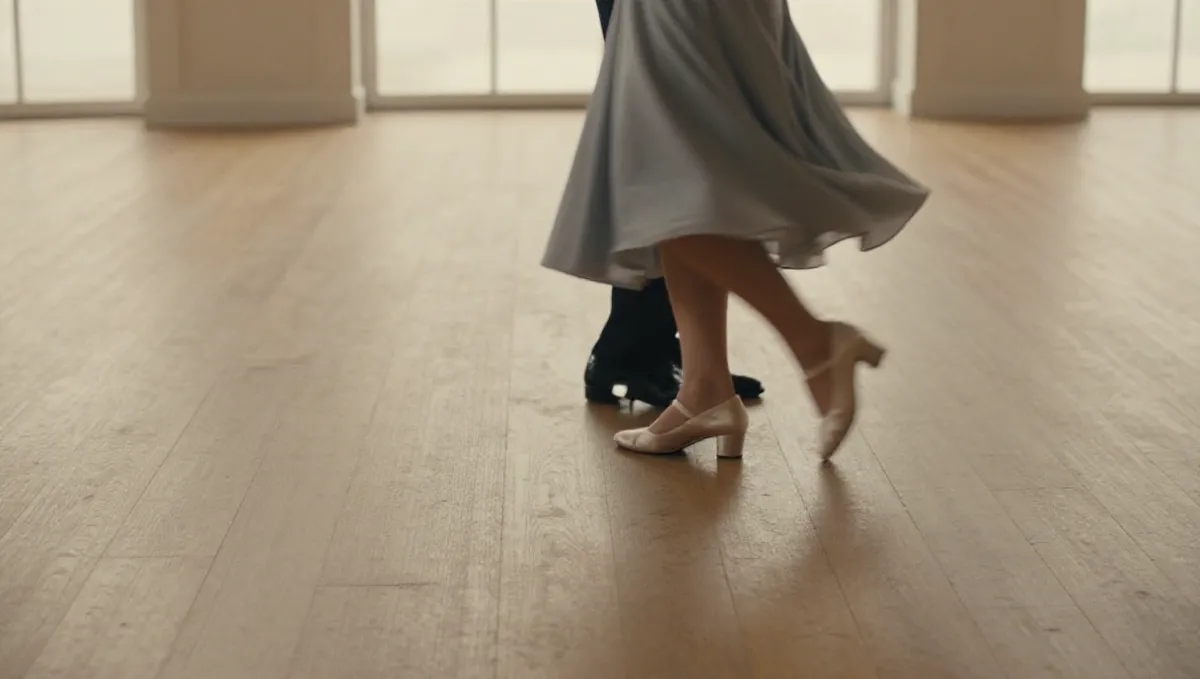
That is also how they feel. 4/4 is steady and square, like walking. 3/4 turns in circles, one heavy step and two light ones. 6/8 rocks back and forth, like a boat or a cradle.
What the two numbers in a time signature mean
A time signature sits at the start of the staff, right after the clef and key signature, and it tells you how the music is grouped. The top number is how many counts there are in each bar (also called a measure). The bottom number is the type of note that gets one count: 4 means a quarter note, 8 means an eighth note, 2 means a half note.
So 4/4 reads as "four quarter notes per bar", 3/4 as "three quarter notes per bar", and 6/8 as "six eighth notes per bar". Bar lines divide the music into those groups, and the first count after every bar line is the downbeat, the strongest point in the bar. Finding beat 1 is most of the work when you count.
Sometimes you will see a large C instead of numbers. That is common time, and it means exactly the same as 4/4. A C with a vertical line through it is cut time, which is 2/2: two half-note beats per bar.
Signatures like 6/8, 9/8 and 12/8 break that reading slightly: their top number counts the small notes, not the beats you would tap your foot to, and that is where most of the confusion about 6/8 comes from.
How to count 4/4 and how it feels
Count 4/4 as "1 2 3 4, 1 2 3 4", one number per quarter note, and say the 1 a little louder each time a new bar starts. When the music has eighth notes, add "and" between the numbers: "1 and 2 and 3 and 4 and". With sixteenth notes the usual count is "1 e and a 2 e and a", and so on.
The beats are not equal in weight. Beat 1 is the strongest, beat 3 is a secondary accent, and beats 2 and 4 are the weak ones. Play a simple left-hand pattern on the piano with a slightly heavier touch on 1 and a lighter one on 3 and the bar starts to sound shaped instead of flat.
Rock, pop and a lot of dance music flip that emphasis on purpose. The kick drum usually lands on 1 and 3, while the snare hits 2 and 4. That snare accent on the weak beats is called the backbeat, and it is what makes people clap on 2 and 4 at a concert.
4/4 feels steady and even. Four splits neatly into two halves, so phrases tend to come in tidy blocks, and the pulse matches walking, marching and most dancing. That is a big part of why it is the default meter for popular music, and why a beginner's first pieces are usually in 4/4.
A practical habit: keep counting through long notes. A whole note in 4/4 lasts the full bar, so play it on "1" and keep saying "2 3 4" in your head until the next bar line. Same with rests. The count does not stop just because your hands do.
How to count 3/4 and why it sounds like a waltz
Count 3/4 as "1 2 3, 1 2 3", with eighth notes as "1 and 2 and 3 and". The accent pattern is strong-weak-weak: one heavy beat followed by two light ones.
The classic waltz accompaniment makes that pattern easy to hear. The left hand plays a bass note on 1, then a chord on 2 and another on 3, the "oom-pah-pah" sound. Dancers take a bigger step on the strong beat and two smaller ones after it, which is why the meter feels like it is turning. Every three beats you are back where you started, slightly further around the room.
Waltzes, minuets, many hymns and a lot of lullabies are in 3/4. Compared with 4/4 it feels lighter on its feet and less grounded, because the bar never splits into two equal halves.
Long notes in 3/4 trip people up because the familiar four-count habit takes over. A dotted half note fills a whole 3/4 bar, so play it on 1 and count "2 3" through it. If you catch yourself adding a fourth beat, slow down and say the numbers out loud, stressing each 1.
How to count 6/8, the meter that trips most beginners
6/8 has six eighth notes per bar, grouped as two sets of three: 1 2 3 | 4 5 6. The two groups are the real beats. Each one lasts a dotted quarter note, which is the same length as three eighth notes.
You will meet two ways of counting it, and both describe the same bar:
- Count every eighth note: "ONE 2 3 FOUR 5 6", with clear accents on 1 and 4 (1 strongest, 4 a little lighter).
- Count the two big beats and split each into three: "ONE la li TWO la li", or "ONE and a TWO and a".
Use the first system when you are learning a piece slowly and need to place each eighth note. Switch to the second once you can play it at speed, because that is how the music actually moves. If your teacher says "1 and a 2 and a" and your book says "1 2 3 4 5 6", neither is wrong; one counts the small notes, the other counts the beats.
Tempo decides which one you feel. At a moderate or quick speed you tap your foot twice per bar, on 1 and 4, and the music feels like two long swinging beats, each with a triplet-like lilt inside. At a very slow tempo, such as a slow ballad, many players feel all six eighth notes and count six.
The feel is rolling and swaying, a rocking motion back and forth rather than the circular turn of a waltz. Irish jigs, boat songs, lots of lullabies and a good share of slow ballads use 6/8.
Why 6/8 is not the same as 3/4
A bar of 3/4 and a bar of 6/8 both hold six eighth notes, so on paper they last the same amount of time. The difference is how those eighth notes are grouped and where the accents fall.
3/4: ONE and TWO and THREE and 1 2 | 3 4 | 5 6 (three beats, each split in two) 6/8: ONE la li TWO la li 1 2 3 | 4 5 6 (two beats, each split in three)
In 3/4 the beats fall on eighth notes 1, 3 and 5. In 6/8 they fall on 1 and 4. Play six even notes on one piano key and accent them each way and you will hear two different rhythms, even though nothing else changed.
This is the difference between simple and compound meter. In simple meter each beat splits into two equal parts (4/4, 3/4, 2/4). In compound meter each beat splits into three (6/8, 9/8, 12/8). Theory books name them by beats and subdivision: 4/4 is simple quadruple, 3/4 is simple triple, 6/8 is compound duple.
6/8 sounds very close to 2/4 with every beat played as a triplet, because both give you two beats split into three. Composers usually choose 6/8 when that three-way split runs through the whole piece, and save triplets for a passing moment inside a simple meter.
4/4, 3/4 and 6/8 side by side
| 4/4 | 3/4 | 6/8 | |
|---|---|---|---|
| Counts written per bar | 4 quarter notes | 3 quarter notes | 6 eighth notes |
| Beats you tap per bar | 4 | 3 | 2 (6 at very slow tempos) |
| Note that gets the felt beat | Quarter note | Quarter note | Dotted quarter note |
| Each beat splits into | 2 | 2 | 3 |
| Type of meter | Simple quadruple | Simple triple | Compound duple |
| Accent pattern | Strong, weak, medium, weak | Strong, weak, weak | Strong on 1, medium on 4 |
| Counting out loud | 1 and 2 and 3 and 4 and | 1 and 2 and 3 and | 1 2 3 4 5 6, or 1 la li 2 la li |
| Feel | Steady, square, walking | Turning, lilting, waltz | Rocking, swaying, rolling |
If you meet 12/8 next, treat it as 6/8 doubled: four groups of three eighth notes, four tapped beats per bar. It is the meter of many slow blues and old-style soul ballads, and it sounds a lot like 4/4 with a triplet feel on every beat.
Clapping and counting drills to feel each meter
These exercises take a few minutes each and work best said out loud. Start slowly, around the speed of a relaxed walk, and only speed up once the accents sit where they should.
- Clap four even beats while counting "1 2 3 4", clapping loudly on 1 and softly on 2, 3 and 4. Do eight bars, then switch to 3/4 with "1 2 3" and a loud clap on 1. Notice how the loud clap comes around sooner in 3/4.
- Clap six even beats in a row and keep the speed the same throughout. First accent claps 1, 3 and 5 while saying "ONE and TWO and THREE and": that is 3/4. Then accent claps 1 and 4 while saying "ONE la li TWO la li": that is 6/8. Alternate between the two every four bars.
- Put it in your body. Walk one step per beat in 4/4. For 3/4, take a bigger step on 1 and two small ones on 2 and 3. For 6/8, stand still and sway left on 1 and right on 4.
- Pat your left hand on your knee on the big beats and your right hand on every small note. In 4/4 the right hand plays two per beat; in 6/8 it plays three per beat. Feeling that two-against-three split in your hands is the simple-versus-compound difference.
For a metronome in 6/8, you have two good options. Set it to click the dotted quarter, so you hear two clicks per bar and fit three eighth notes into each click. Or set it to click every eighth note at three times the speed and use the accent setting so it marks 1 and 4. A dotted-quarter click of 60 per minute equals eighth notes at 180. Setting the metronome to 3/4 and calling it 6/8 is the usual mistake, because it puts the accent on the wrong notes.
How to tell which time signature a piece is in by ear
Listening for meter gets easier with a fixed routine:
- Tap along with the steady pulse that feels natural, without thinking about numbers.
- Find the downbeat. It is usually the heaviest-sounding tap, often where the bass note lands or the chord changes, and where a new phrase tends to begin.
- Count your taps from one downbeat to the next. If you reach 4 before the next heavy one, you are probably in 4/4. If you reach 3, probably 3/4. If you only get to 2, the piece could be in 2/4 or 6/8.
- Listen inside each tap. If the faster notes fill each beat in twos ("1 and 2 and"), the meter is simple. If they fall in threes ("1 la li 2 la li"), it is compound, and two taps with a three-way lilt points to 6/8.
The most common mix-up is between 3/4 and 6/8. A quick check: if you tap three times per bar and each tap feels plain, it is 3/4. If you tap twice per bar and each tap has a skipping, galloping feel inside it, it is 6/8.
Some music deliberately plays with this. A bar grouped 3+3 can be followed by one grouped 2+2+2, so the rhythm seems to switch between 6/8 and 3/4. That shift is called a hemiola, and it shows up often in Baroque dances and Latin American music. If a piece keeps tricking you, that may be the reason.
Common counting mistakes
Treating 6/8 as 3/4 is the big one. You accent every second eighth note instead of every third, and the music loses its sway. Saying "ONE la li TWO la li" out loud fixes it faster than anything else.
Counting 6/8 evenly is the next one. Six flat counts with no accent on 4 make a bar of six eighth notes, but not a bar that feels like 6/8.
Many beginners stop counting during held notes and rests and then come in early. Keep the count going in your head through every silent beat, especially in 3/4, where the four-count habit tries to sneak back in.
Confusing the bottom number with the beat you feel is the last trap. The 8 in 6/8 says the eighth note is the unit being counted, not that you tap on every eighth note. At normal tempos the beat you feel is the dotted quarter.
Odd meters like 5/4 and 7/8 work the same way once you get to them: find the groups of twos and threes inside the bar and count those.
Try it now on MuziAI
Free, no sign-up required. Share an idea, and our AI lyrics generator writes and sings a complete song.
Create Song