What Is Syncopation? Why Some Songs Make You Move and How to Build That Groove
Tempo sets how fast the pulse goes. Groove comes from where the notes and accents sit around that pulse. Syncopation is the main tool for this: it puts the
By the MuziAI team. The numbers come from measurements we ran ourselves while building MuziAI; drafts were written with AI assistance, and every figure was checked against our measurement logs. Updated October 13, 2026.
Tempo sets how fast the pulse goes. Groove comes from where the notes and accents sit around that pulse. Syncopation is the main tool for this: it puts the emphasis on a weak beat or in the gap between beats, often while leaving the expected strong beat quiet. When something steady holds the beat (usually the drums and bass) and other parts land just off it, you feel a small pull that your body resolves by moving. That is why two songs at 100 BPM can feel completely different: one hits every downbeat squarely, the other pushes, delays and leaves gaps.
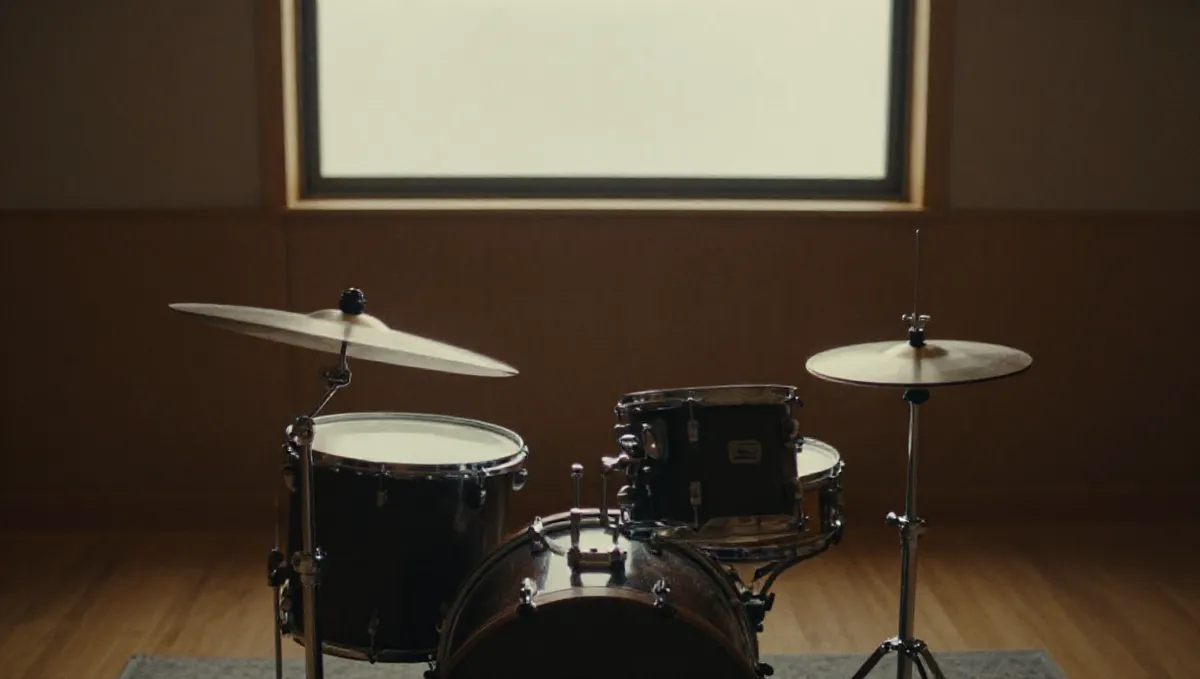
Why tempo alone doesn't make a song groove
Speed changes energy, not feel. Play a chord on every beat of every bar at any tempo and it sounds like a march or a metronome, because nothing surprises your ear. Move a few of those chords half a beat earlier, drop one or two, and the same progression at the same tempo starts to bounce.
Groove needs two things at once. One part has to keep the pulse obvious so you know where the beat is, and another part has to play against that pulse so there is something to feel. Take away the steady part and the off-beat notes just sound random. Take away the off-beat part and you are left with a click track.
Strong beats and weak beats, the grid syncopation plays against
In 4/4 time, beat 1 is the strongest, beat 3 is the second strongest, and beats 2 and 4 are the weak beats. Your ear expects important things (chord changes, the first word of a line, the kick drum) to arrive on 1 and, to a lesser degree, on 3.
Most rock, pop, funk and R&B already bend this. The snare hits on 2 and 4, a pattern called the backbeat, so the loudest crack in the drum kit lands on the metrically weak beats. That is the first, mildest step away from a march.
Between the beats sit the off-beats. Counting eighth notes, you say "1 and 2 and 3 and 4 and", and every "and" is an off-beat. Going finer, sixteenth notes are counted "1 e and a 2 e and a", so each beat has three more slots after it. Syncopation is measured against this grid. If you can't feel where 1 is, you can't feel a note landing just before it.
What syncopation actually is
Syncopation happens when the emphasis lands where the meter says it shouldn't: on a weak beat, or between beats, especially when the strong beat it displaces is left empty or held over from the note before.
A hi-hat playing steady eighth notes hits every "and", but nobody calls that syncopated, because the pattern is even and the strong beats are still played. The off-beat note becomes syncopated when it carries the accent or when the downbeat after it is withheld. Off-beat describes a position. Syncopation describes a shift in emphasis.
You will run into four common forms:
- An anticipation, also called a push, is a chord, bass note or word that arrives an eighth or sixteenth before the downbeat and holds through it. The ear expects the change on beat 1, hears it early, and feels the bar tip forward.
- A guitar or keyboard can stab on the off-beats while the bass and kick stay on the beat. Reggae guitar chops on the off-beats are the textbook case.
- The downbeat can be left out entirely. The reggae "one drop" groove puts the kick and snare together on beat 3 and leaves beat 1 empty, so the strongest beat of the bar has nothing on it.
- The tresillo hits on 1, the "and" of 2, and 4 in a bar of eight eighth notes, grouping the bar as 3 + 3 + 2. Clap it and you will recognise it from Latin music, a lot of pop, and the rhythm under much of reggaeton.
Eighth notes vs sixteenth notes and how many places a note can land
The subdivision you think in decides how many positions are available. Eighth notes give you eight slots in a bar of 4/4. Sixteenth notes give you sixteen.
Syncopation on eighth notes feels broad and easy to follow. A rock song that pushes the chord change onto the "and" of 4 is working at this level, and so are most off-beat guitar chops. Syncopation on sixteenths feels tighter and busier, the kind of interlocking pattern you hear in funk: Stevie Wonder's "Superstition" sets a funky clavinet riff over a groove of swung sixteenth notes. Much hip-hop and R&B drum programming also lives on the sixteenth grid, with kicks on the "a" before a beat or the "e" after it.
Choosing sixteenths does not mean filling sixteen slots. It means the notes you do play can sit in finer positions. If your song feels stiff and you have only been placing notes on beats and "ands", try moving one note to an "e" or an "a" before adding anything new.
Swing vs straight
Straight subdivisions are evenly spaced: the "and" falls exactly halfway between two beats. Swing delays the off-beat note of each pair, so a pair of eighths becomes long-short instead of even. Musicians usually describe this as a triplet feel, where the first note takes roughly two-thirds of the beat and the second takes the last third.
That two-to-one figure is a reference point, not a rule. Real players swing more or less depending on the style and the tempo, and a little swing on sixteenth notes is what gives a lot of hip-hop and neo-soul its lazy, behind-the-beat lean. Start light and increase it until the off-beats feel relaxed, then stop before they feel lopsided.
Swing and syncopation are separate tools. Syncopation is about which slots you use. Swing is about where those slots sit in time. You can have a straight, syncopated funk riff or a swung pattern that never syncopates at all.
How drums and bass build the groove together
The rhythm section divides the work. The kick and snare set the frame, the hi-hat or shaker shows the subdivision, and the bass connects rhythm to harmony.
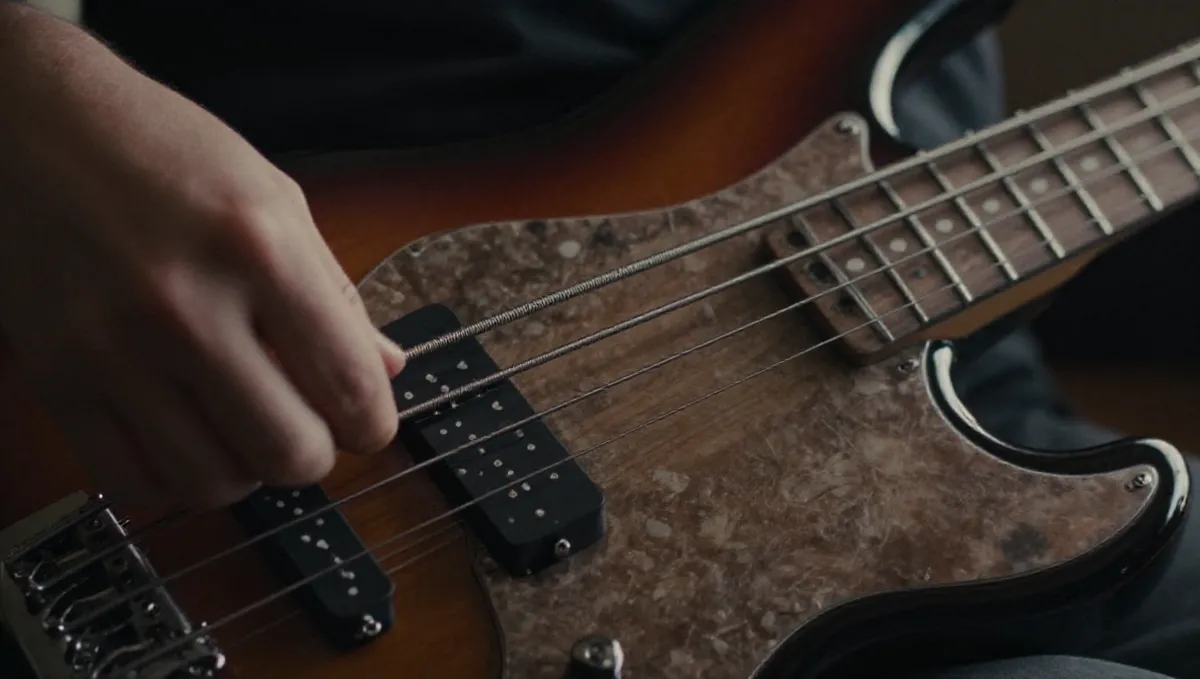
The most dependable relationship is the bass locking with the kick on the key hits and then adding notes in the gaps the kick leaves. When the kick plays 1 and the "and" of 2, and the bass hits those same two points, the low end sounds like one instrument. A bass note between kick hits then answers the drums instead of colliding with them.
Problems start when both syncopate in different places at once. If the kick pushes the "a" before 3 and the bass pushes the "and" of 2, neither one is holding the beat, and the bottom of the mix turns to mush. A simple starting rule: let one of them be the anchor and the other the one that moves. You can swap the roles in a different section of the song.
Why rests make a groove work
A syncopated note only sounds syncopated if there is space around it. When a bass plays long, sustained notes into every beat, an early note just blurs into the next one and the push disappears. Cut the same notes short and leave rests, and each placement becomes audible.
This is what the old advice to "play less" is really about. Silence on beat 1, a rest before a pushed chord, a gap after a snare hit: these are what let the remaining notes register as early, late or off the beat.
There is also a ceiling. If every instrument syncopates every bar, the listener loses track of where the beat is and the music stops feeling danceable. Keep at least one thing obvious, usually the kick on 1 or the backbeat snare, and the other parts have room to wander.
Clap it before you play it, a practice routine
You don't need an instrument to train this. You need your hands, your foot and your voice.
- Set a metronome slow, around 70 BPM. Tap your foot on every click and count "1 and 2 and 3 and 4 and" out loud.
- Clap only on the "ands" while your foot stays on the beats. When this feels easy, clap only the "and" of 2 and the "and" of 4.
- Clap the tresillo: 1, the "and" of 2, and 4, counting all eight eighth notes out loud.
- Switch to sixteenths, counting "1 e and a". Clap only the "a" of each beat, then only the "e". These are harder because they sit right next to the beat.
- Set the metronome to click only on 2 and 4, the backbeat, and repeat the patterns. Your own sense of 1 and 3 now has to do the work.
The goal is that your foot never stops or shifts toward your hands. When it drifts, slow down. Feeling groove is a trained skill: steady time comes first, and placement on top of it comes with repetition.
How to make a stiff part groove
Take a part from your own song that lands on every beat and try these moves one at a time, listening after each.
- Push one change. Move a chord change, or the first bass note of a bar, an eighth or sixteenth earlier and hold it through the downbeat.
- Move one note off the beat. Shift a single kick or bass note from beat 3 to the "and" of 2 or the "a" of 2.
- Delete notes. Remove one or two hits per bar and listen to what the gaps do to the rest.
- Add ghost notes. Quiet snare taps on a few sixteenths suggest the subdivision without cluttering it, and they make the loud hits stand out more.
- Loosen the grid. If your drums are programmed, add a small amount of swing, or move a few notes slightly off the exact grid position, then check that every part agrees.
The same thinking works for vocals. A line that starts every phrase on beat 1 and puts one syllable on each beat sounds like a nursery rhyme. Start the phrase on the "and" of 4 in the bar before, let a stressed word land on an off-beat, or leave a rest where the listener expects a word. Melodies that breathe around the beat sit inside the groove instead of on top of it.
Mistakes that kill groove
If a song still feels flat after you add syncopation, it is usually one of these:
- Syncopating everything. When drums, bass, chords and vocal all avoid the downbeat, nobody knows where 1 is.
- Drums and bass fighting. The kick and bass each push in different places, so the low end has no anchor.
- Mixing swung and straight parts. A straight hi-hat over a swung bass sounds sloppy rather than relaxed. Pick one feel per section and apply it to every part.
- Notes that are too long. Sustained notes fill the rests that would make the pushes audible.
- Rushing the off-beats. A syncopated note placed too early sounds nervous. Count it, place it, and let the beat that follows still arrive on time.
If you sketch ideas in MuziAI, check where the drums and bass sit against beat 1 before deciding a part needs more notes.
Try it now on MuziAI
Free, no sign-up required. Share an idea, and our AI lyrics generator writes and sings a complete song.
Create Song