
AI Music Ballad
Ballads are slow, emotional songs, usually built on piano and strings. Ballad lyrics should have long lines and open vowels so the voice can sustain notes.
13 songs. Create one like this.
Ballad is MuziAI's best-stocked category (13 AI-sung samples) and also its most uniform: all 13 run at exactly 72 BPM, 12 sit in D minor or F major, and 11 chord loops start on Dm. D minor and F major share the same notes, so nearly the whole group lives in one harmonic neighbourhood. This describes MuziAI's 13 samples, not the ballad as a genre; 13 songs is still a small sample.
Measured profile
Figures are read from the score the system writes for each song. The right-hand column is Bolero, the closest slow genre.
| Metric | Ballad (13 songs) | Bolero (2 songs) |
|---|---|---|
| BPM | 72 for all 13 | 72 for both |
| Key | D minor 8, F major 4, F-sharp major 1 | F major 1, G major 1 |
| Length | 158 to 286 s, median 208 | 250 to 252 s |
| Bars (median) | 63 | 76 |
| Chords per bar | 1.19 | 1.10 |
| Vocal range | 17 semitones | 26 semitones |
| Voice | female 7, male 6 | male 1, duet 1 |
| Language | 9 languages (Vietnamese 3, Chinese 2, Korean 2...) | Vietnamese 2 |
At the same tempo, ballads are shorter and narrower than boleros. Ballad lengths still spread widely, because length is almost exactly bars times four beats divided by 72: all the variation sits in how the song is sectioned. The 72 comes from the settings. The genre tag says "slow tempo" and the "Slow" option adds "slow tempo around 72 BPM". Across all 58 samples, 28 land on exactly 72 BPM.
How MuziAI builds this genre
The style description sent to the singing model opens with "Ballad, emotional, piano, soft strings, slow tempo". All 13 add piano; at least 9 ask for a key change in the final chorus. Vocal techniques: vibrato 6, melismatic runs 3, belting 3, breathy intimate vocals 3. Moods: sad 7, nostalgic 3, romantic 2, lonely 1.
Inside the samples
"Tiễn Con Lên Phố" and "De Brief Die Nooit Vertrok" show where length comes from. The first has two 16-bar verses and an 8-bar interlude: 87 bars, 286 seconds, and a melody spanning 27 semitones, the widest in the group. The second has only 9-bar verses and no bridge: 48 bars, 160 seconds, with its weight on a 17-bar final chorus.
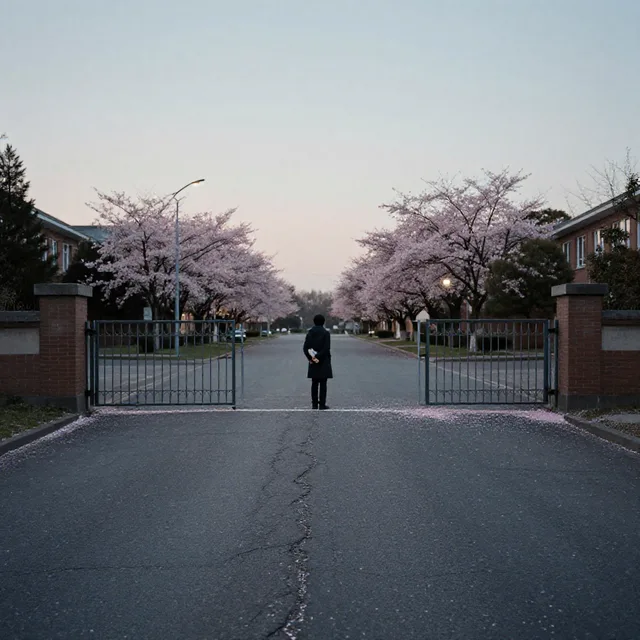
"Der letzte Abend am See" and "言えなかった恋の花" mark the harmonic extremes. The German song just alternates Dm and Bb, one chord per bar. The Japanese one is the only sample outside D minor and F major and has the busiest harmony (1.7 per bar): Bmaj7, C#, A#m7, D#m7. "妈妈的饭香" uses the same frame in F major (Bbmaj7, C7/Bb, Am7, Dm7), that is IV, V, iii, vi, a loop very familiar from Japanese pop.
Getting better results
- Don't expect anything but 72. No ballad sample uses another speed, so it is unknown whether the model would follow 60 or 90 BPM.
- Set length through the lyrics. The three samples over four minutes all have 16-bar verses; the two around 2 minutes 40 seconds have 9-bar verses. The lyric writer helps split stanzas.
- To escape the Dm, Am, Bb, C loop, use the existing-score panel on the song generator with "言えなかった恋の花" or "서울의 첫눈" (1.66 chords per bar).
- Treat a key change as a hint. Techniques reach the model as suggestions; nothing guarantees the final chorus really changes key.
- Write long lines with open vowels so the voice can sustain. In one Vietnamese lyric clarity test, the ballad scored 0.947, ahead of pop (0.909) and bolero (0.786).
Limits
Each song was generated once, and nine languages means most have a single sample. The data stores one key per song, so it cannot confirm any key change. The clarity test rests on three songs. Listen for yourself in the sample library.
Related research
Track list

बारिश की रात
बारिश की बूँदें खिड़की पे आईं
Ballad, Romantic, 4:19

De Brief Die Nooit Vertrok
Ik schrijf je naam op geel papier,
Ballad, Sad, 2:40

Der letzte Abend am See
Die Sonne sinkt so langsam überm Wasser,
Ballad, Nostalgic, 3:28

겨울의 잔상
헤어진 뒤 처음 맞는 겨울,
Ballad, Sad, 3:28
言えなかった恋の花
桜の花びら 舞い散る校庭
Ballad, Nostalgic, 3:57

雨夜擦肩
雨丝落在旧街灯
Ballad, Sad, 3:14

Faded Ink, Burning Heart
Dust on the drawer, a forgotten name
Ballad, Sad, 3:33
Sân Ga Vắng
Sân ga chiều nay gió lạnh
Ballad, Sad, 4:35
ฝนกรุงเทพฯ คิดถึงเธอ
ฝนตกที่กรุงเทพฯ อีกแล้ววันนี้
Ballad, Sad, 3:54

서울의 첫눈
차가운 바람이 불어와
Ballad, Romantic, 3:23

妈妈的饭香
离家那年的秋天
Ballad, Nostalgic, 2:38
Người Từng Thương
Phố hôm nay đông người qua
Ballad, Lonely, 2:59

Tiễn Con Lên Phố
Sân ga chiều nay vắng bóng mưa
Ballad, Sad, 4:46